
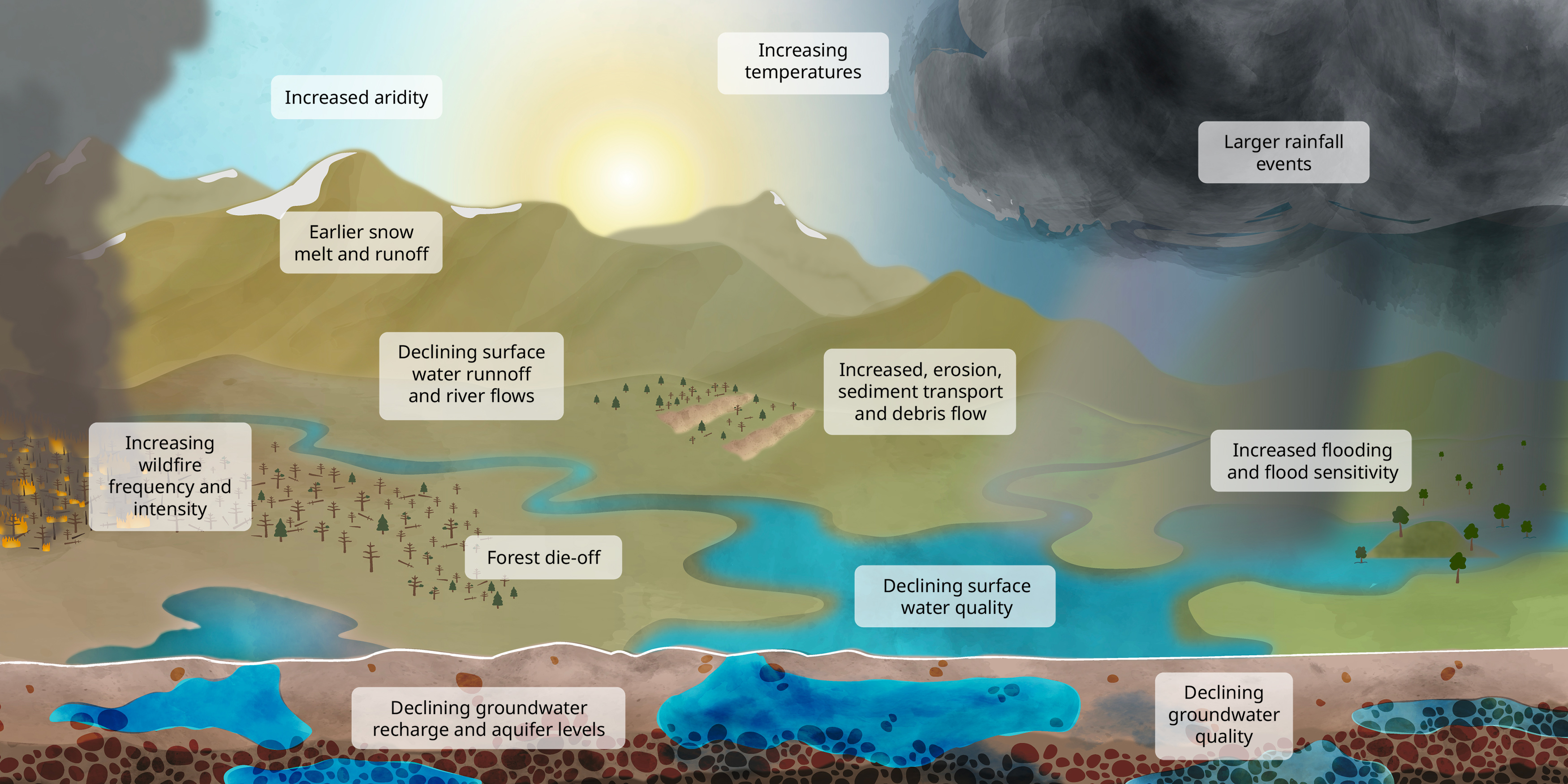
The cascade of climate impacts to our water availability starts in the sky.
New Mexico is getting warmer, and rain is becoming less predictable. This means the snowpack—which is like a natural water storage tank for the state—is melting earlier. When the snow melts too fast (Earlier Snowpack Melt and Runoff), rivers, reservoirs, and surface water supplies drop later in the year, leading to Declining Surface Water Runoff, River Flows, and Reservoir Levels.
These high temperatures also make water evaporate faster and dry out our landscapes. When the land gets drier, plants and trees struggle, which is linked to things like Forest Die-Offs. A dry, bare landscape can't soak up water well, so when we do get intense, heavy rain storms, we see more serious Increased Flooding and Flood Sensitivity and issues with Increased Erosion, Sediment Transport, and Debris Flows. This runoff can also lead to Declining Surface Water Quality.
Another big worry is how dry conditions lead to More and Higher Intensity Wildfires. Fires burn up the land, and the resulting debris can damage water infrastructure and pollute our water sources. All this stress on our water supply can also put a strain on underground water, impacting Declining Groundwater Recharge and Aquifer Levels and potentially Declining Groundwater Quality.
Explore more climate impacts using the menu to the left.
Information source: Climate Change in New Mexico Over the Next 50 Years: Impacts on Water Resources
MainstreamNM educational video series: Water Facts for New Mexicans